Blockchain in Travel: Practical Applications & 12-Month U.S. Roadmap

The U.S. travel industry can significantly enhance operational efficiency, security, and customer trust by adopting practical blockchain applications through a structured 12-month implementation roadmap.
The global travel industry stands on the precipice of a technological revolution, and within the United States, leaders are increasingly looking towards innovative solutions. One such solution, gaining considerable traction, is
blockchain travel roadmap implementation, promising to reshape everything from booking experiences to supply chain management and customer loyalty programs. This exploration delves into the tangible applications and a strategic 12-month plan for U.S. industry leaders to effectively integrate this transformative technology.
Understanding blockchain’s core value in travel
Blockchain technology, at its core, offers a decentralized, immutable ledger system that can record transactions securely and transparently. For the U.S. travel industry, this translates into unprecedented opportunities to build trust, reduce fraud, and streamline complex operational processes. It moves beyond just cryptocurrencies, providing a foundational layer for enhanced data management and secure interactions across a fragmented ecosystem.
The inherent transparency of blockchain means that once data is recorded, it cannot be altered without leaving a verifiable trace. This feature is particularly valuable in an industry where numerous intermediaries often complicate transactions and data integrity. From airline reservations to hotel bookings and tour operations, blockchain can create a single source of truth that all parties can access and verify.
Enhanced data security and privacy
Travelers’ personal data is a prime target for cyberattacks. Blockchain’s cryptographic security measures can significantly enhance data protection, offering a more robust defense against breaches. This can lead to greater consumer confidence, knowing their sensitive information is handled with the utmost care.
- Immutable transaction records reduce fraud.
- Decentralized storage minimizes single points of failure.
- Cryptographic encryption protects personal identifiable information.
Ultimately, understanding blockchain’s value in travel involves recognizing its potential to create a more efficient, secure, and trustworthy environment for both businesses and consumers. It’s about moving towards a future where every transaction, every booking, and every piece of data is verifiable and protected.
Practical applications for the U.S. travel sector
The theoretical benefits of blockchain need to translate into practical, actionable solutions for the U.S. travel sector. These applications span various facets of the industry, from improving customer experiences to optimizing back-end operations. Identifying the most impactful use cases is crucial for a successful implementation strategy.
One of the most immediate applications lies in identity management. Digital identities stored on a blockchain can enable seamless, secure check-ins at airports and hotels, reducing wait times and enhancing security protocols. This not only improves the traveler’s journey but also provides greater assurance for service providers regarding passenger verification.
Streamlining loyalty programs
Traditional loyalty programs often suffer from fragmentation and expiration issues. Blockchain can revolutionize these programs by creating tokenized loyalty points that are easily transferable, have clear value, and can be redeemed across multiple partners. This fosters greater flexibility and engagement for travelers.
- Interoperable loyalty tokens across brands.
- Reduced administrative costs for loyalty programs.
- Enhanced transparency in point redemption.
Another significant area is supply chain management within the travel industry, particularly for tour operators and package holiday providers. Blockchain can track every component of a travel package, from flight tickets to hotel reservations and local excursions, ensuring transparency and accountability among all vendors. This reduces disputes and provides a clearer audit trail.
Building a 12-month implementation roadmap: Phase 1 (Months 1-3)
Embarking on a blockchain implementation journey requires a structured approach. The first three months of a 12-month roadmap for U.S. travel industry leaders should focus on foundational planning, stakeholder alignment, and proof-of-concept development. This initial phase is critical for establishing a clear vision and securing necessary resources.
During this period, companies should conduct a thorough internal assessment to identify specific pain points that blockchain can address. This involves engaging with various departments, from customer service to IT and finance, to understand current challenges and potential areas for improvement. A clear business case must be developed, outlining the expected return on investment and strategic advantages.
Strategic planning and team formation
The first step is to assemble a dedicated blockchain task force, comprising experts in technology, business strategy, legal, and compliance. This team will be responsible for driving the initiative forward. Simultaneously, a detailed strategic plan needs to be formulated, defining the scope, objectives, and key performance indicators (KPIs) for the blockchain project.
- Conduct internal needs assessment.
- Form cross-functional blockchain task force.
- Define clear project scope and KPIs.
The focus during these initial months should be on education and alignment. Ensuring that all key stakeholders understand the potential of blockchain and are on board with the strategic direction is paramount. This includes workshops, informational sessions, and clear communication channels to address concerns and build enthusiasm. A small, manageable proof-of-concept (PoC) should be designed to demonstrate the technology’s viability without overwhelming resources.
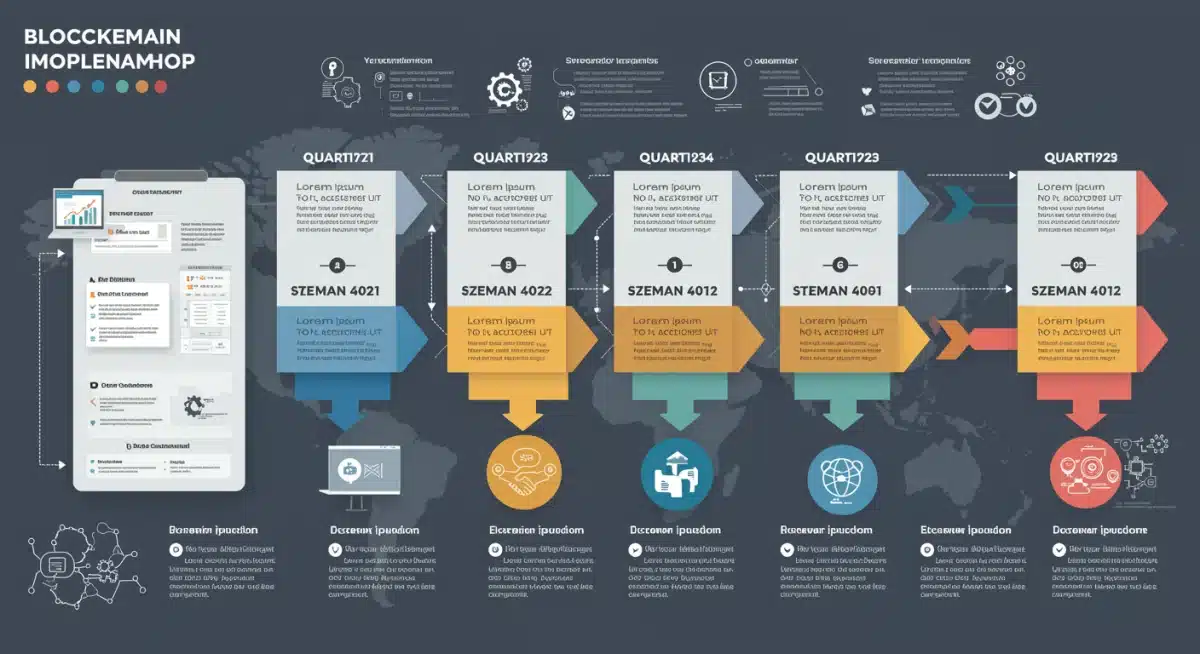
Phase 2 (Months 4-6): Pilot programs and platform development
Following the foundational work of Phase 1, months 4-6 are dedicated to moving from conceptualization to tangible execution. This phase involves the development of pilot programs, selecting appropriate blockchain platforms, and initiating the technical build-out. The goal is to test the technology in a controlled environment and gather critical feedback.
Identifying a specific use case for a pilot program is crucial. This could be a simplified version of a loyalty program, a secure document sharing system for travel agents, or a basic supply chain tracking solution. The pilot should be designed to be small enough to manage effectively but robust enough to provide meaningful insights into the technology’s performance and integration challenges.
Technology selection and vendor partnerships
Choosing the right blockchain platform (e.g., Ethereum, Hyperledger Fabric, Corda) is a critical decision that will impact scalability, security, and cost. This involves evaluating various platforms based on the specific needs of the pilot program and the broader strategic objectives. Forming partnerships with experienced blockchain solution providers or consultants can accelerate this process and mitigate risks.
- Select a suitable blockchain platform.
- Develop and execute a focused pilot program.
- Establish key vendor and technology partnerships.
Throughout this phase, continuous monitoring and evaluation are essential. Regular check-ins with the pilot team, gathering user feedback, and analyzing performance metrics will inform subsequent development stages. The lessons learned from these pilot programs will be invaluable in refining the broader implementation strategy and ensuring that the technology delivers on its promise for the U.S. travel industry.
Phase 3 (Months 7-9): Scaling and integration
With successful pilot programs under their belt, U.S. travel leaders enter Phase 3, focusing on scaling up the blockchain solution and integrating it with existing legacy systems. Months 7-9 are about expanding the reach of the technology and ensuring it operates seamlessly within the company’s established infrastructure. This phase often presents significant technical and organizational challenges.
The insights gained from the pilot programs will guide the full-scale development. This means iterating on the initial design, incorporating feedback, and enhancing functionalities to meet broader business requirements. The expansion might involve rolling out the solution to more departments, increasing the number of participants in a blockchain network, or extending its use to more complex transactions.
Interoperability with existing systems
A major challenge in this phase is ensuring that the new blockchain solution can effectively communicate with existing enterprise resource planning (ERP) systems, customer relationship management (CRM) platforms, and other critical software. This often requires developing custom APIs and middleware to bridge the gap between distributed ledger technology and traditional databases.
- Expand blockchain solution to a wider audience.
- Develop APIs for seamless integration with legacy systems.
- Conduct extensive testing for scalability and performance.
Rigorous testing is paramount during this scaling phase. Performance, security, and user experience must be meticulously evaluated to prevent disruptions and ensure the system can handle increased loads. Training programs for employees who will interact with the new system should also be intensified, fostering adoption and maximizing the benefits of the blockchain integration.
Phase 4 (Months 10-12): Full deployment and optimization
The final quarter of the 12-month roadmap, months 10-12, culminates in the full deployment of the blockchain solution and a continuous focus on optimization and monitoring. This phase marks the transition from development to operational use, requiring robust support systems and a commitment to ongoing improvement.
Full deployment involves making the blockchain solution accessible to all intended users, whether they are internal employees, external partners, or end-consumers. This requires careful planning for rollout, including communication campaigns, comprehensive training, and robust technical support to address any immediate issues that may arise.
Continuous monitoring and governance
Once deployed, the blockchain system requires continuous monitoring to ensure optimal performance, security, and compliance. This includes tracking key metrics, analyzing user behavior, and identifying areas for further enhancement. Establishing clear governance models for the blockchain network is also essential, especially if multiple organizations are involved.
- Execute full-scale deployment of the blockchain solution.
- Implement continuous monitoring and performance analysis.
- Establish robust governance and compliance frameworks.
Optimization is an ongoing process. Based on real-world usage data and feedback, companies should continuously refine the blockchain application, adding new features, improving efficiency, and adapting to evolving industry needs. This long-term commitment ensures that the initial investment in blockchain technology continues to deliver value and maintain a competitive edge for U.S. travel industry leaders.
| Key Implementation Phase | Brief Focus |
|---|---|
| Months 1-3: Foundation & Vision | Internal assessment, team formation, strategic planning, and initial PoC design. |
| Months 4-6: Pilots & Development | Platform selection, pilot program execution, and technical build-out. |
| Months 7-9: Scaling & Integration | Expanding solution, integrating with legacy systems, and comprehensive testing. |
| Months 10-12: Deployment & Optimization | Full system rollout, continuous monitoring, and ongoing performance enhancement. |
Frequently asked questions about blockchain in travel
The primary benefit is enhanced trust and transparency across the entire travel ecosystem. Blockchain provides an immutable record of transactions and data, reducing fraud, increasing security, and streamlining complex interactions between various stakeholders, from airlines to hotels and tour operators.
Blockchain can tokenize loyalty points, making them more flexible, transferable, and valuable across different travel partners. This reduces fragmentation, prevents point expiration, and offers customers greater control and choice in how they earn and redeem rewards, fostering stronger brand engagement.
The initial steps involve a thorough internal needs assessment to identify pain points, forming a dedicated blockchain task force, defining clear project scope and KPIs, and developing a small proof-of-concept. This foundational planning ensures alignment and demonstrates early viability.
While blockchain is transparent, privacy can be managed through various cryptographic techniques and permissioned networks. Personal data can be stored off-chain or encrypted, with only verifiable hashes on the blockchain. This allows for enhanced security without compromising individual privacy, adhering to regulations like GDPR.
Challenges include interoperability with existing legacy systems, the complexity of technical implementation, regulatory uncertainties, and the need for significant stakeholder education and buy-in. Overcoming these requires careful planning, skilled teams, and a phased approach to integration and deployment.
Conclusion
The integration of blockchain technology within the U.S. travel industry is not merely a futuristic concept; it is a tangible opportunity for significant operational and experiential improvements. By following a meticulously planned 12-month implementation roadmap, industry leaders can systematically navigate the complexities of adoption, from initial conceptualization and pilot programs to full-scale deployment and continuous optimization. The benefits, spanning enhanced security, streamlined processes, and elevated customer trust, position blockchain as a critical tool for competitive advantage and sustainable growth in the evolving travel industry. The journey requires strategic vision, collaborative effort, and a commitment to innovation, ultimately paving the way for a more efficient and transparent future for travel in the United States.