Blockchain in Travel: U.S. Agencies Adopt for Secure Transactions

The travel industry, often perceived as traditional, is currently undergoing a silent but profound transformation. An insider report reveals a compelling trend: a projected 30% of U.S. travel agencies are expected to adopt blockchain technology for secure transactions by mid-2026. This isn’t just a fleeting trend; it’s a strategic move reshaping the very foundations of how travel bookings, payments, and data management are handled. The integration of blockchain travel agencies is poised to deliver unprecedented levels of security, transparency, and efficiency, addressing long-standing pain points within the sector.
For decades, the travel ecosystem has grappled with issues ranging from payment fraud and data breaches to opaque supply chains and slow settlement processes. These challenges have not only eroded consumer trust but also inflated operational costs for agencies. Blockchain, with its decentralized, immutable, and cryptographic ledger system, offers a robust solution to these intricate problems. Its inherent design promises a future where every transaction, every booking, and every piece of customer data is recorded securely and transparently, accessible only to authorized parties.
The report’s findings underscore a growing recognition among U.S. travel agencies that innovation is not merely an option but a necessity for survival and growth in an increasingly digital and demanding market. Early adopters are already leveraging blockchain to streamline operations, enhance customer experiences, and build a more resilient business model. This comprehensive analysis delves into the driving forces behind this rapid adoption, the myriad benefits it offers, the hurdles that need to be overcome, and what the future holds for the intersection of blockchain and the travel industry.
The Impetus Behind Blockchain Travel Agencies’ Adoption
Several critical factors are propelling U.S. blockchain travel agencies towards this technological embrace. The primary drivers revolve around security, efficiency, and the imperative to restore and maintain consumer trust in an age of pervasive cyber threats.
Combatting Fraud and Enhancing Security
Payment fraud remains a significant concern for travel agencies. Chargebacks, identity theft, and fraudulent bookings cost the industry billions annually. Blockchain’s cryptographic security features make transactions virtually tamper-proof. Each transaction is encrypted and linked to the previous one, forming a chain that is incredibly difficult to alter without detection. This distributed ledger technology (DLT) ensures that once a transaction is recorded, it cannot be unilaterally reversed or changed, drastically reducing instances of fraud and providing a verifiable audit trail for every booking and payment.
Improving Transparency and Trust
The travel supply chain is notoriously complex, involving airlines, hotels, tour operators, booking platforms, and payment processors. This complexity often leads to a lack of transparency, making it difficult to track the origin and validity of services, or to quickly resolve disputes. Blockchain’s transparent ledger provides a single, immutable source of truth for all participants. This enhanced transparency fosters greater trust among all stakeholders, from the customer knowing exactly what they’re paying for, to agencies having clear visibility into their partnerships and suppliers. Smart contracts, self-executing agreements stored on the blockchain, can automate and enforce terms and conditions, further solidifying trust and reducing manual intervention.
Streamlining Payments and Reducing Costs
Traditional payment systems in the travel industry often involve multiple intermediaries, leading to high transaction fees, slow settlement times, and currency conversion complexities. Blockchain-based payment solutions, particularly those utilizing cryptocurrencies or stablecoins, can bypass these intermediaries. This results in significantly lower transaction costs and near-instantaneous settlement, improving cash flow for agencies and providing more competitive pricing options for customers. The reduction in administrative overhead associated with dispute resolution and reconciliation also contributes to substantial cost savings.
Revolutionizing Data Management and Personalization
Customer data is the lifeblood of personalized travel experiences. However, managing this data securely and compliantly is a major challenge. Blockchain offers a way for customers to control their personal data, granting agencies access only when necessary and with explicit consent. This "self-sovereign identity" model can enhance data privacy and compliance with regulations like GDPR, while still allowing agencies to offer highly personalized services based on customer preferences, without the risk of centralized data breaches. Agencies can build a more comprehensive and secure profile of their customers, leading to more tailored recommendations and improved satisfaction.
Key Applications and Use Cases for Blockchain in Travel
The practical applications of blockchain across the travel industry are vast and varied, extending beyond just secure transactions. Blockchain travel agencies are exploring its potential in several key areas:
Secure Payment Processing
As highlighted, this is the most immediate and impactful application. By facilitating direct, secure, and irreversible payments, blockchain reduces the reliance on traditional card networks, cutting down fees and processing times. This is particularly beneficial for international transactions, where currency exchange and cross-border payment complexities are often significant.
Loyalty Programs and Rewards
Blockchain can revolutionize loyalty programs by tokenizing reward points. These tokens can be easily transferable, have real-world value, and be redeemed across a network of participating travel providers, eliminating the fragmentation and expiration issues common with traditional loyalty schemes. This creates a more flexible and valuable reward system for travelers and a more engaging platform for agencies.
Identity Management and Digital Passports
Imagine a world where your digital identity, including your passport, visa information, and health records, is securely stored on a blockchain. Travelers could grant airlines and border control agencies temporary, verifiable access to this information, significantly speeding up check-ins and security checks while enhancing privacy. This concept is gaining traction as nations explore digital identity solutions.
Baggage Tracking and Supply Chain Transparency
Lost luggage is a traveler’s nightmare and an airline’s logistical headache. Blockchain can provide an immutable record of a bag’s journey from check-in to destination, allowing real-time tracking and pinpointing exactly where a bag might have gone astray. This same principle applies to tracking other elements of the travel supply chain, such as food catering for flights or spare parts for aircraft maintenance, ensuring quality and authenticity.
Dynamic Pricing and Inventory Management
Smart contracts on a blockchain can automate dynamic pricing models based on real-time demand and supply, ensuring optimal pricing for both consumers and providers. Similarly, inventory management can become more efficient, with real-time updates across all booking platforms, reducing overbooking and ensuring accurate availability of rooms, seats, or tour slots.
Challenges and Considerations for Adoption
While the prospect of blockchain travel agencies is exciting, the path to widespread adoption is not without its challenges. These hurdles need to be addressed systematically for successful integration.
Scalability and Transaction Speed
One of the primary concerns with some blockchain networks is their scalability. For a high-volume industry like travel, the ability to process thousands, if not millions, of transactions per second is crucial. While newer blockchain protocols are addressing these issues, ensuring the chosen platform can handle the industry’s demands is paramount.
Regulatory Uncertainty
The regulatory landscape surrounding blockchain and cryptocurrencies is still evolving. Different jurisdictions have varying approaches, creating uncertainty for businesses operating globally. Travel agencies need clear guidelines and legal frameworks to navigate this complex environment and ensure compliance.
Interoperability
The travel industry relies on a vast network of disparate systems and platforms. For blockchain to be truly effective, it needs to seamlessly integrate with existing legacy systems and be interoperable with other blockchain networks. This requires significant investment in integration solutions and industry-wide standardization efforts.
User Experience and Education
For blockchain to gain mainstream acceptance, the underlying technology needs to be invisible to the end-user. The user interface for blockchain-powered applications must be intuitive and user-friendly. Furthermore, educating both consumers and travel agency staff about the benefits and mechanics of blockchain is crucial to foster trust and encourage adoption.
Cost of Implementation
Implementing blockchain technology requires significant upfront investment in infrastructure, software development, and training. For smaller travel agencies, these costs can be prohibitive. However, as the technology matures and more standardized solutions emerge, the cost of entry is expected to decrease, making it more accessible.
The Future Landscape: What 2026 and Beyond Holds
The projection of 30% adoption by mid-2026 is a strong indicator of the significant shift occurring. This initial wave of blockchain travel agencies will likely pave the way for even broader integration, creating a more robust, secure, and efficient travel ecosystem. We can anticipate several key developments:
Increased Collaboration and Consortiums
To overcome challenges like interoperability and regulatory uncertainty, travel agencies, technology providers, and industry bodies will likely form more consortiums. These collaborations will aim to develop industry-wide standards, shared blockchain infrastructure, and best practices, accelerating adoption and ensuring a cohesive approach.
Emergence of Specialized Blockchain Solutions
We will see the development of more specialized blockchain platforms and applications tailored specifically for the unique needs of the travel industry. These solutions will address specific pain points, from flight delays compensation to hotel inventory management, offering plug-and-play options for agencies.
Enhanced Customer-Centric Experiences
With secure data management and streamlined processes, travel agencies will be able to offer hyper-personalized travel experiences. Imagine AI-powered travel assistants leveraging blockchain-secured data to curate bespoke itineraries, manage bookings, and even handle real-time problem-solving during a trip, all while respecting user privacy.
New Business Models and Revenue Streams
Blockchain could enable entirely new business models within the travel sector. Decentralized autonomous organizations (DAOs) could emerge, allowing communities of travelers to collectively own and manage travel services. Tokenization of assets, such as vacation rentals or fractional ownership of travel experiences, could create new investment opportunities and revenue streams for agencies.
Integration with Other Emerging Technologies
Blockchain will not operate in isolation. Its true power will be unlocked when integrated with other cutting-edge technologies like Artificial Intelligence (AI), the Internet of Things (IoT), and Virtual Reality (VR). For instance, IoT sensors could track luggage in real-time, with blockchain recording the data immutably, while AI analyzes patterns for predictive maintenance of aircraft or personalized recommendations.

Case Studies and Early Adopters: Paving the Way
While the 30% figure refers to future adoption, several pioneering companies have already begun integrating blockchain into their operations, offering valuable insights and demonstrating its potential impact on blockchain travel agencies.
- Winding Tree: This decentralized B2B travel marketplace uses blockchain to connect travel suppliers directly with buyers, cutting out intermediaries and reducing costs. It offers a more efficient and transparent way for airlines, hotels, and tour operators to sell their inventory.
- TravelChain: Focused on creating a decentralized data exchange for the travel industry, TravelChain aims to empower travelers with control over their data while enabling personalized services for agencies.
- LemonChain: Addressing the issue of flight delays and cancellations, LemonChain utilizes smart contracts to automatically process compensation for travelers based on predefined conditions, removing the need for manual claims and lengthy disputes.
- Abit: This platform leverages blockchain for secure and transparent payment processing in the travel sector, particularly for B2B transactions, aiming to reduce fraud and accelerate settlements.
These early successes serve as powerful examples, demonstrating that blockchain is not just a theoretical concept but a practical solution already delivering tangible benefits within the travel industry. Their experiences provide a roadmap for other agencies considering adoption, highlighting both the opportunities and the necessary strategic planning.
How U.S. Travel Agencies Can Prepare for the Blockchain Revolution
For U.S. travel agencies looking to be part of this transformative wave, proactive preparation is key. Here are actionable steps to consider:
- Education and Awareness: Start by educating leadership and key personnel about blockchain technology, its potential applications in travel, and its strategic implications. Understanding the basics is crucial for informed decision-making.
- Pilot Programs: Begin with small-scale pilot projects. Focus on a specific pain point, such as secure payment processing for a particular segment of bookings or a loyalty program for a niche market. This allows for testing and learning without significant upfront investment.
- Partnering with Tech Innovators: Collaborate with blockchain technology providers and startups specializing in travel solutions. These partnerships can provide access to expertise, ready-made platforms, and accelerate implementation.
- Assessing Infrastructure Needs: Evaluate current IT infrastructure and identify areas that may need upgrades or modifications to support blockchain integration. This includes data storage, API capabilities, and security protocols.
- Developing a Clear Strategy: Define specific goals for blockchain adoption. Is it to reduce fraud, improve efficiency, enhance customer loyalty, or create new revenue streams? A clear strategy will guide implementation and measure success.
- Focus on Data Governance: As blockchain deals with immutable data, establishing robust data governance policies from the outset is critical. This ensures compliance, data quality, and responsible use of information.
Conclusion: A New Era for Blockchain Travel Agencies
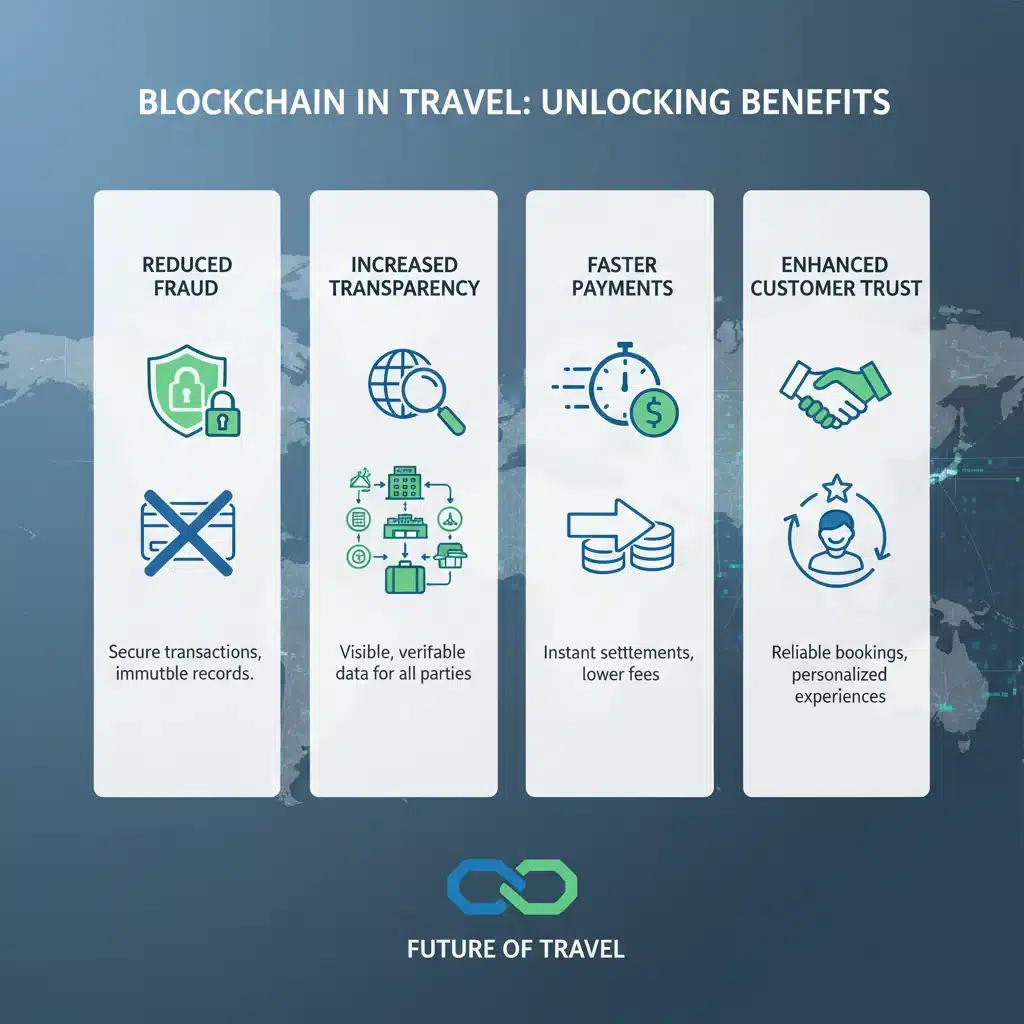
The insider report predicting 30% adoption of blockchain by U.S. travel agencies for secure transactions by mid-2026 signals a pivotal moment for the industry. This isn’t merely a technological upgrade; it’s a fundamental shift towards a more secure, transparent, and efficient travel ecosystem. The benefits – from fraud reduction and streamlined payments to enhanced customer trust and personalized experiences – are too compelling for agencies to ignore.
While challenges such as scalability, regulatory clarity, and interoperability remain, the proactive steps taken by early adopters and the continuous evolution of blockchain technology are steadily paving the way for wider acceptance. As blockchain travel agencies embrace this innovation, they are not just securing their transactions; they are future-proofing their businesses, fostering deeper trust with their customers, and unlocking new possibilities for growth and innovation in the dynamic world of travel.
The journey towards a fully blockchain-integrated travel industry is ongoing, but the direction is clear. Those who embrace this transformation will be well-positioned to lead in the new era of secure, transparent, and digitally advanced travel experiences, ultimately benefiting both businesses and travelers alike.