Amtrak Upgrades vs. Regional Airlines: East Coast Travel in 2026
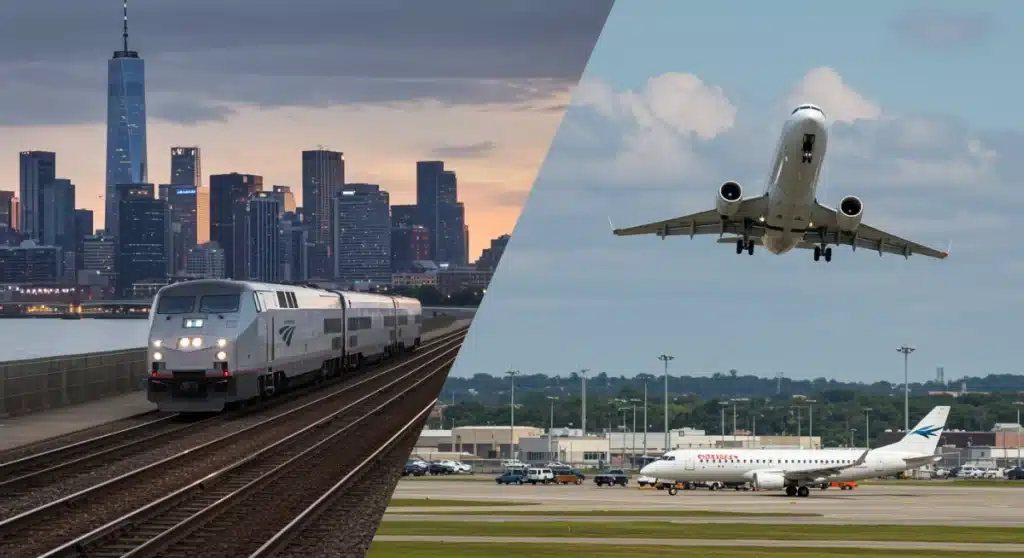
Comparing Amtrak’s significant 2026 upgrades with regional airline expansions for US East Coast travel reveals a dynamic competition in speed, comfort, and environmental impact, shaping future transportation choices for passengers.
As we look towards 2026, the landscape of US East Coast travel is undergoing a significant transformation. Travelers face an evolving choice between a revitalized rail experience and expanding air services. This article delves into a detailed comparison, examining how Amtrak vs Regional Airlines are positioning themselves to capture the hearts and wallets of passengers.
The Resurgence of Rail: Amtrak’s 2026 Vision
Amtrak, America’s national passenger rail corporation, is embarking on an ambitious modernization journey, with substantial upgrades slated for completion or significant progress by 2026. This initiative aims to redefine train travel, particularly along the densely populated Northeast Corridor (NEC) and other key East Coast routes. The focus is on enhancing speed, reliability, and the overall passenger experience, directly challenging the dominance of short-haul regional flights.
These upgrades are not merely cosmetic; they involve significant infrastructure investment and the introduction of next-generation rolling stock. The goal is to make train travel a more attractive and competitive alternative for intercity routes, especially those under 500 miles, where the advantages of rail can truly shine. Early indicators suggest a positive reception from travelers seeking more sustainable and comfortable journeys.
Next-Generation Acela Trains and Infrastructure
- New Acela Fleet: By 2026, the new Acela Avelia Liberty trains are expected to be fully deployed, offering increased capacity, enhanced amenities, and a smoother, quieter ride. These trains are designed for higher speeds, although track constraints often limit their full potential.
- Track and Signal Modernization: Extensive work is underway to upgrade tracks, bridges, and signal systems along the NEC. This includes projects aimed at eliminating bottlenecks and improving operational efficiency, which will directly translate to reduced travel times and fewer delays.
- Station Enhancements: Major station renovations at key hubs like Moynihan Train Hall in New York City and improved facilities in Washington D.C. and Boston are designed to offer a more seamless and pleasant boarding experience, with better accessibility and modern conveniences.
The long-term impact of these investments is expected to position Amtrak as a formidable competitor in the East Coast travel market. By addressing historical pain points such as aging infrastructure and limited capacity, Amtrak aims to provide a reliable, efficient, and enjoyable travel option that appeals to both business and leisure travelers. The emphasis on high-speed rail, even if not at international bullet train levels, offers a distinct advantage over the complexities of air travel for shorter distances.
Regional Airlines: Expanding Networks and Efficiency
While Amtrak focuses on its rail renaissance, regional airlines are not standing still. By 2026, the regional airline sector on the US East Coast continues to evolve, driven by a need for increased efficiency, expanded route networks, and improved passenger connectivity. These carriers play a crucial role in feeding passengers into larger hubs and serving smaller, underserved markets, often providing the only direct air link for many communities.
The strategy for regional airlines typically involves optimizing fleet utilization, adopting more fuel-efficient aircraft, and expanding partnerships with major carriers. This allows them to offer a wide array of destinations and frequencies, catering to travelers who prioritize speed and direct access to various points across the East Coast, even for relatively short distances.
Fleet Modernization and Route Expansion
- New Aircraft: Many regional carriers are investing in new generation regional jets like the Embraer E2 series or Bombardier CRJ series, which offer better fuel efficiency, quieter cabins, and enhanced passenger comfort compared to older models. This modernization helps reduce operating costs and improves the overall flight experience.
- Increased Frequencies: To meet growing demand and competition, regional airlines are adding more flights on popular routes and opening new connections to smaller cities. This provides travelers with greater flexibility and more departure options throughout the day.
- Enhanced Connectivity: Partnerships with larger airlines are becoming even more critical, allowing regional carriers to offer seamless connections to domestic and international flights from major East Coast hubs. This integrated network approach is a key competitive advantage.
The regional airline industry’s ongoing commitment to fleet modernization and network expansion ensures its continued relevance in the East Coast travel ecosystem. By focusing on efficiency and connectivity, these airlines aim to maintain their competitive edge, especially for routes where air travel remains the fastest or most convenient option, despite the potential for longer ground transportation to and from airports.
Travel Time: Door-to-Door Comparison
When comparing Amtrak and regional airlines, the concept of ‘travel time’ extends far beyond just the journey itself. A true door-to-door analysis reveals a more nuanced picture, especially for East Coast routes where urban centers are often the origin and destination points. By 2026, both modes are striving to optimize this total travel time, but their approaches differ significantly.
For regional airlines, the flight duration is often short, but the entire process, including travel to the airport, security checks, boarding, and deplaning, can add substantial time. Amtrak, on the other hand, often benefits from centrally located stations and simpler boarding procedures, potentially offsetting slower cruising speeds.
The Airport Gauntlet vs. Station Simplicity
Air travel typically involves a pre-flight routine that can be time-consuming and stressful. This includes arriving at the airport well in advance, navigating security checkpoints, and waiting at the gate. Delays, while often associated with air travel, can also stem from these ground processes. Regional airlines, while sometimes operating from smaller terminals, still adhere to most of these procedures, which can eat into the perceived time savings of a short flight.
Train travel offers a different experience. Passengers can often arrive closer to departure time, walk directly to their platform, and board with minimal fuss. Security checks are generally less intrusive, and the absence of takeoff and landing queues means less idle time. For city-to-city travel, particularly within the Northeast Corridor, this streamlined process can make a significant difference in overall journey duration.
By 2026, both Amtrak and regional airlines are implementing technologies to speed up processes, such as mobile ticketing and improved baggage handling. However, the fundamental differences in infrastructure and regulatory requirements mean that Amtrak often holds an inherent advantage in reducing pre-departure friction, making it a surprisingly competitive option for total travel time on many East Coast routes.
Comfort and Amenities: Enhancing the Passenger Experience
Beyond speed and efficiency, the quality of the journey itself plays a crucial role in traveler preference. In 2026, both Amtrak and regional airlines are investing in comfort and amenities, though their offerings cater to different aspects of the travel experience. The goal for both is to make the time spent in transit as pleasant and productive as possible.
Amtrak’s upgrades focus on spacious seating, dedicated work areas, and a more relaxed atmosphere, while regional airlines aim for compact efficiency with modern conveniences. Understanding these differences can help travelers choose the option best suited for their needs, whether it’s working on the go or simply enjoying the view.
Onboard Experience: Rail vs. Air
- Amtrak’s Spaciousness: New Acela trains offer significantly more legroom and wider seats than typical airline economy classes. Power outlets, Wi-Fi, and dedicated quiet cars or business class sections facilitate work or relaxation. Dining options range from cafe cars to at-seat service, providing flexibility.
- Regional Airline Amenities: While regional jets are smaller, newer models often feature improved cabin designs, larger overhead bins, and in-flight Wi-Fi. Some offer premium economy or first-class sections with slightly more space. Beverage and snack service is common, though meal options are rare on short flights.
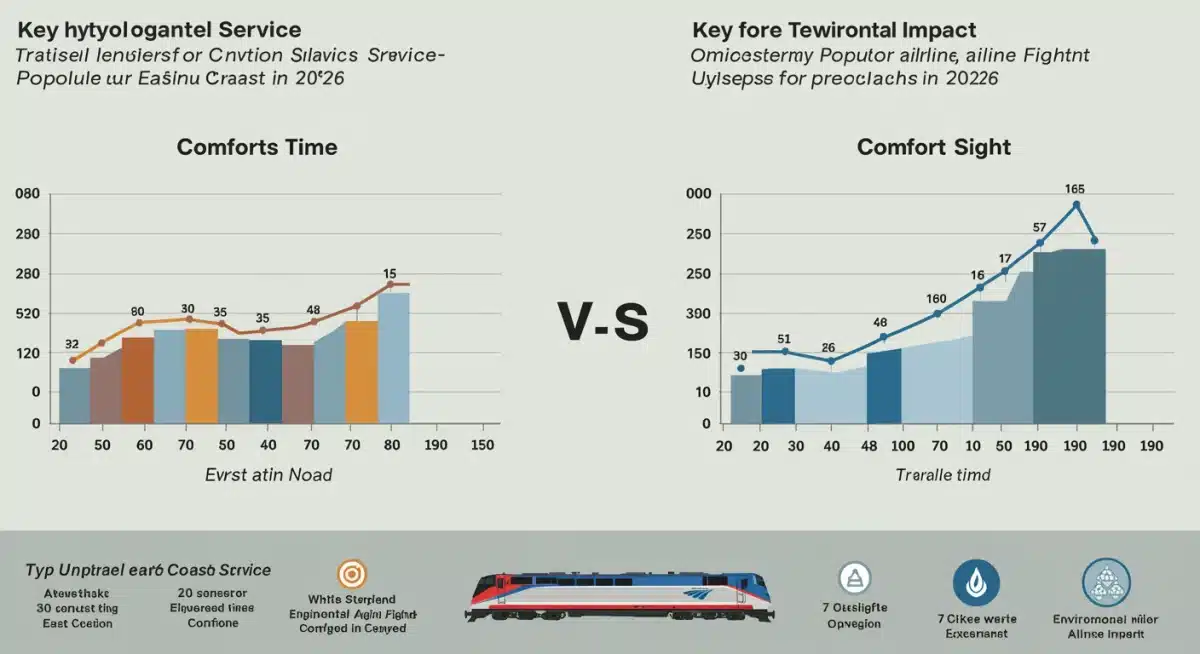
The ability to move around freely, access dining cars, and enjoy larger windows are distinct advantages of train travel. For those who find flying restrictive or prefer to avoid the confined space of an aircraft cabin, Amtrak’s enhanced comfort features present a compelling alternative. Conversely, regional airlines emphasize rapid transit, making the shorter duration of the flight a key aspect of their comfort proposition for many travelers. The choice ultimately depends on individual priorities for space, amenities, and overall journey style.
Cost-Effectiveness and Pricing Strategies in 2026
The financial aspect remains a primary consideration for many travelers. In 2026, both Amtrak and regional airlines employ dynamic pricing strategies, making a direct cost comparison complex. However, an examination of general trends and hidden costs can provide clarity on which mode might offer better value for East Coast journeys.
Amtrak’s pricing often becomes more competitive for shorter to medium-range routes, especially when booked in advance. Regional airlines, while often advertising low base fares, frequently add significant costs for baggage, seat selection, and other services. The total cost of travel, including incidental expenses, is crucial for an accurate assessment.
Deconstructing Fares and Hidden Fees
- Amtrak’s Value Proposition: Amtrak fares typically include baggage allowance, and there are no extra charges for seat selection in standard class. Business and First Class offer additional perks. Promotions and multi-ride passes can further reduce costs for frequent travelers.
- Airline Ancillary Fees: Regional airlines, like their larger counterparts, rely heavily on ancillary revenue. Checked bags, carry-on bags exceeding personal item limits, seat assignments, and in-flight services can quickly inflate the advertised ticket price. These fees can make short, seemingly cheap flights surprisingly expensive.
- Flexibility and Changes: Both modes offer varying levels of flexibility. Amtrak’s change fees are often less punitive than those of airlines, particularly for lower-tier fares, though this can vary by ticket type. Understanding these policies is key when comparing the true cost of travel.
When factoring in the entire travel budget, including transportation to and from terminals, parking, and potential fees, Amtrak can often present a more cost-effective solution for many East Coast routes. The transparency of its pricing structure, with fewer unexpected add-ons, appeals to budget-conscious travelers. Regional airlines, while offering speed, require careful attention to total costs to avoid budget overruns. By 2026, consumers are more aware of these hidden costs, influencing their travel decisions.
Environmental Impact and Sustainability Efforts
With growing global awareness of climate change, the environmental footprint of travel is an increasingly important factor for many consumers. In 2026, both Amtrak and regional airlines are under pressure to demonstrate their commitment to sustainability, though their inherent operational characteristics lead to different levels of impact and mitigation strategies.
Rail travel is generally considered a more environmentally friendly option compared to flying, especially over shorter distances. However, regional airlines are also investing in newer, more fuel-efficient aircraft and exploring sustainable aviation fuels (SAFs) to reduce their emissions. This section explores the environmental considerations for each mode.
Green Credentials: Trains vs. Planes
- Amtrak’s Lower Carbon Footprint: Electric-powered trains, particularly along the NEC, produce significantly fewer greenhouse gas emissions per passenger mile than air travel. Even diesel trains are generally more fuel-efficient than airplanes for similar distances. Amtrak’s modernization efforts also focus on energy-efficient operations and infrastructure.
- Regional Airlines’ Mitigation: Newer regional jets are designed to be more fuel-efficient, reducing emissions compared to older models. The industry is also exploring the use of Sustainable Aviation Fuels (SAFs) and optimizing flight paths to minimize fuel burn. However, the fundamental energy intensity of air travel remains higher than rail for comparable distances.
- Noise Pollution: Train travel typically generates less localized noise pollution than air travel, particularly around urban centers. Airports and flight paths are significant sources of noise for surrounding communities, an issue regional airlines are working to mitigate through quieter aircraft designs.
For environmentally conscious travelers, Amtrak’s inherent advantages in reducing carbon emissions and noise pollution make it a preferred choice for East Coast travel. The continued electrification of rail lines and the introduction of energy-efficient trains will further solidify its position as a sustainable travel option. While regional airlines are making strides in reducing their environmental impact, the scale of emissions associated with air travel means that rail will likely remain the greener alternative for most intercity journeys in 2026.
| Comparison Point | Key Insights for 2026 East Coast Travel |
|---|---|
| Travel Time | Amtrak excels in door-to-door efficiency for city centers; regional airlines offer faster flight segments but longer airport processes. |
| Comfort & Amenities | Amtrak provides spacious seating, mobility, and varied dining; regional airlines focus on efficient, modern cabin designs for shorter flights. |
| Cost-Effectiveness | Amtrak often offers better overall value with fewer hidden fees; regional airline base fares can be misleading due to ancillary charges. |
| Environmental Impact | Amtrak boasts a significantly lower carbon footprint, especially with electric trains; regional airlines are improving efficiency but face inherent aviation challenges. |
Frequently Asked Questions About East Coast Travel in 2026
While Amtrak’s new Acela trains are faster, the total door-to-door travel time, considering airport procedures versus central station access, often makes Amtrak competitive for specific city-pair routes, especially those under 300 miles. Direct flight speed remains higher.
Amtrak’s 2026 upgrades include new Acela Avelia Liberty trains with more spacious seating, improved Wi-Fi, dedicated quiet cars, and enhanced dining options. Station renovations also contribute to a more comfortable overall experience for passengers.
Yes, regional airlines are continuously optimizing route networks, often adding frequencies to existing popular routes and establishing new connections to smaller, underserved communities. This expansion enhances connectivity to major hubs across the East Coast.
Amtrak generally offers a significantly lower carbon footprint per passenger mile, especially on electrified routes like the Northeast Corridor. While regional airlines are improving fuel efficiency, rail remains the greener choice for most comparable East Coast journeys.
Amtrak often presents better overall value due to inclusive fares for baggage and seat selection. Regional airlines may have lower base fares but often add significant ancillary fees, making a full cost comparison essential for budget-conscious travelers.
Conclusion
The comparison between 2026 Amtrak upgrades and regional airline expansions for US East Coast travel reveals a compelling and evolving landscape for passengers. Amtrak’s significant investments in speed, comfort, and infrastructure position it as a powerful contender, especially for city-to-city routes where its door-to-door efficiency, spaciousness, and lower environmental impact offer distinct advantages. Regional airlines, meanwhile, continue to leverage their speed and expanding networks to provide crucial connectivity, particularly for travelers prioritizing direct access to diverse destinations. Ultimately, the optimal choice for East Coast travel in 2026 will depend on individual priorities regarding total travel time, comfort preferences, budget constraints, and commitment to sustainable practices. Both modes are innovating to meet traveler demands, ensuring a dynamic and competitive future for transportation along the bustling East Coast.